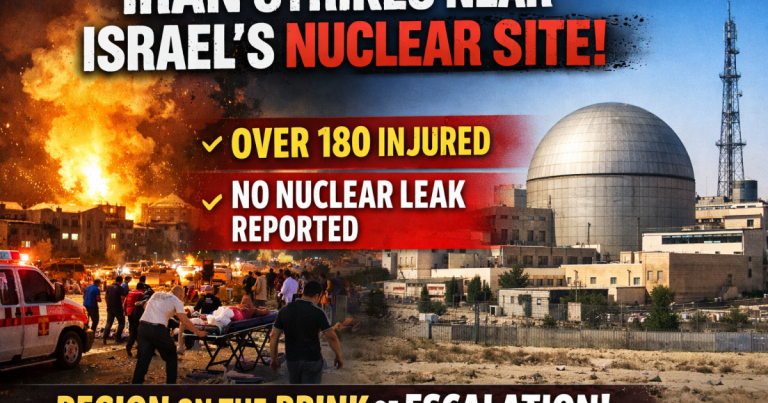
Iran’s missile attack struck the city of Dimona — home to Israel’s main nuclear research center — and the nearby city of Arad, injuring at least 180 people. The attack took place on Saturday night (March 21, 2026), adding a dangerous new dimension to the ongoing US-Israel and Iran war, now entering its second month.
What Happened
The Israeli military confirmed that it failed to intercept the missile before it struck Dimona. Iran’s state television described the attack as a direct “response” to an earlier strike on Iran’s Natanz nuclear enrichment complex that same day. This marks the first time Israel’s nuclear research facility has been targeted during this war.
Key Details
At least 116 people were injured in Arad, seven of them in critical condition. The missile that struck Dimona hit a residential area, seriously injuring a 10-year-old child. The International Atomic Energy Agency (IAEA) reported no damage to the Shimon Peres Negev Nuclear Research Center in Dimona, and radiation levels in the area remain normal.
Reactions
Israeli Prime Minister Benjamin Netanyahu called it “an extremely difficult evening” and announced that additional emergency resources were being dispatched to the affected areas. IAEA Director General Rafael Grossi called for maximum military restraint around nuclear facilities. G7 foreign ministers and the European Union strongly condemned Iran’s attack, demanding it be stopped immediately and unconditionally.
Background
On February 28, 2026, the United States and Israel jointly launched strikes on multiple sites inside Iran. Since then, both sides have been engaged in a series of retaliatory attacks. The Dimona research center, secretly built with French assistance in 1958, sits at the heart of Israel’s nuclear program.
What Next / Impact
Following the attack, Israel’s Ministry of Education announced that all schools would shift to online classes on Sunday and Monday. US President Trump threatened to strike Iranian power plants if the Strait of Hormuz is not reopened. Analysts warn that the growing trend of targeting nuclear facilities is pushing the Middle East crisis into a dangerous and unprecedented new chapter.
Frequently Asked Questions (FAQ)
1. Was Israel’s nuclear research center directly hit or damaged in the attack?
No. Although the missile struck a residential area in Dimona — the city where the Shimon Peres Negev Nuclear Research Center is located — the IAEA confirmed that the facility itself suffered no damage and radiation levels in the surrounding area remained completely normal.
2. Why did Iran target Dimona specifically?
Iran described the strike as a direct retaliation for an earlier Israeli and US attack on Iran’s Natanz nuclear enrichment complex on the same day. By targeting Dimona, Iran appeared to be sending a symbolic message — striking near Israel’s most sensitive nuclear site in response to its own nuclear facility being hit.
3. How many people were injured and how serious were the casualties?
Over 180 people were injured in total across Dimona and the nearby city of Arad. At least 116 injuries were reported in Arad alone, with seven people in critical condition. Among the wounded was a 10-year-old child who was seriously hurt when the missile struck a residential area.
4. How did the international community respond to the attack?
The reaction was swift and largely condemnatory. G7 foreign ministers and the European Union strongly condemned Iran’s strike and demanded it be stopped immediately. IAEA chief Rafael Grossi urged all parties to exercise maximum restraint around nuclear facilities. US President Trump escalated his warnings, threatening to strike Iranian power plants if the Strait of Hormuz remained blocked.
5. What does this attack mean for the broader conflict going forward?
This attack marks a significant and alarming escalation. It is the first time Israel’s nuclear research center has been directly targeted in the ongoing war. Analysts believe that both sides crossing the threshold of striking near nuclear facilities could push the Middle East conflict into a far more dangerous and unpredictable phase, raising serious concerns about regional and global security.
Sources:
The Guardian | BBC News | Reuters | Al Jazeera | IAEA Official Statement | G7/EU Statement | CNN/AP | Times of Israel
Your comment will appear immediately after submission.