Introduction
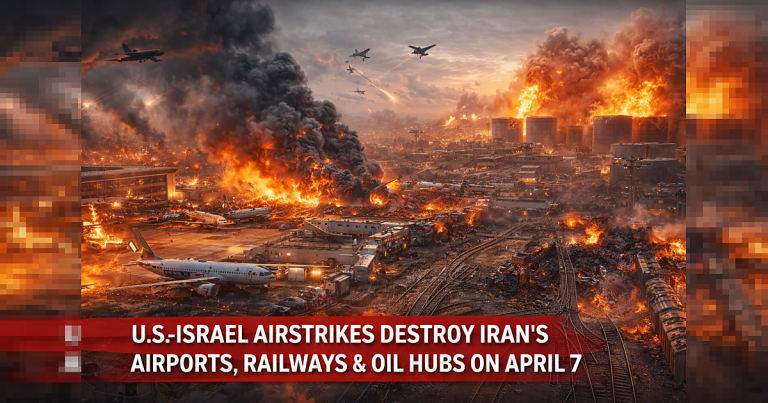
On April 7, 2026, the United States and Israel launched large-scale coordinated airstrikes across Iran, targeting key infrastructure including airports, railways, and oil facilities. The attacks came amid escalating tensions over Iran’s blockade of the Strait of Hormuz. The strikes mark one of the most intense days in the ongoing Middle East conflict.
What Happened
The United States and Israel carried out a series of coordinated airstrikes across multiple Iranian cities, focusing on strategic infrastructure. Airports, railway networks, bridges, and energy facilities were among the primary targets.
Reports indicate that U.S. forces conducted dozens of strikes, including attacks on Kharg Island—an essential hub for Iran’s oil exports—while Israeli forces targeted transportation systems such as rail tracks and bridges.
Several regional airports were also hit, including one in western Iran, as part of efforts to disrupt Iran’s logistics and military mobility.
Key Details
Date: April 7, 2026
Main Targets: Airports, railways, oil hubs, bridges, and military facilities
Major Strike Zone: Kharg Island (handles most of Iran’s oil exports)
Scale:
Around 50 U.S. strike operations reported
Additional Damage:
Rail systems, petrochemical sites, and power infrastructure across multiple cities
The strikes were timed around a deadline set by U.S. leadership demanding Iran reopen the Strait of Hormuz, a critical global oil route.
Reactions
U.S. leadership defended the strikes as necessary to pressure Iran into compliance, warning of further destruction if demands were not met.
Iran strongly condemned the attacks, calling them acts of aggression and vowing retaliation. Iranian officials emphasized that they would respond militarily and refused to accept external pressure without concessions.
International observers and legal experts raised concerns, suggesting that widespread attacks on infrastructure could risk civilian harm and potentially violate international law.
Background
The conflict began in late February 2026 and has rapidly escalated into a broader regional war. Both sides have exchanged missile and air attacks over several weeks, targeting military and strategic assets.
Tensions intensified after Iran effectively blocked the Strait of Hormuz, a vital global oil shipping route. In response, the U.S. issued ultimatums and increased military operations alongside Israel.
What Next / Impact
The situation remains highly volatile, with fears of further escalation across the Middle East. Iran has already signaled retaliation, including potential strikes on U.S. and allied assets in the region.
Global oil prices have surged due to concerns over supply disruptions, and there is growing risk of other countries being drawn into the conflict.
If the conflict continues to intensify, it could lead to wider regional instability, economic disruption, and increased humanitarian risks.
Your comment will appear immediately after submission.