5 Health Benefits of Fasting, Backed by Science
Key Takeaways
- Fasting may help manage blood sugar by reducing insulin resistance, which allows your body to transport glucose more efficiently and keep blood sugar levels steady.
- Some research suggests intermittent fasting may support weight loss, reduce inflammation, and improve heart health markers like cholesterol and blood pressure.
- Common fasting methods include water fasting, juice fasting, intermittent fasting, and calorie restriction. Talk with a healthcare professional before fasting if you have diabetes or other health conditions, as it may cause low blood sugar or other side effects.
Despite its recent surge in popularity, fasting is a practice that dates back centuries and plays a central role in many cultures and religions.
Fasting is defined as abstinence from all or some foods or drinks for a set period. There are many different ways of fasting. Generally, most fasts are performed over 24–72 hours.
Intermittent fasting, on the other hand, involves cycling between periods of eating and fasting, ranging from a few hours to a few days at a time. Fasting can have health benefits, such as increased weight loss and better brain function.
Here are 6 health benefits of fasting — backed by science.
1. Promotes blood sugar management by reducing insulin resistance
Several studies have found that fasting may improve blood sugar management, which may be helpful for those at risk of developing diabetes.
A 2023 studyTrusted Source of 209 people found intermittent fasting 3 days per week can reduce the risk of type 2… Show more
2. Promotes better health by fighting inflammation
While acute inflammation is a natural immune process used to help fight off infections, chronic inflammation can seriously affect your health.
ResearchTrusted Source shows that inflammation may be involved in the development of chronic conditions… Show more
3. May enhance heart health by improving blood pressure
Heart disease is considered the leading cause of death worldwide, accounting for an estimated 19 millionTrusted Source deaths globally in 2020. Switching up your diet and lifestyle is one of the most effective ways to reduce your risk of heart disease.
Some research has found that incorporating fasting into your routine may be especially beneficial for heart health.
One reviewTrusted Source revealed that alternate-day fasting could reduce levels of total cholesterol and several risk factors for heart disease in people with overweight compared to a control group.
4. Aids weight loss by limiting calorie intake
Many dieters experiment with fasting to try to lose weight. Theoretically, abstaining from all or certain foods and beverages should decrease your overall calorie intake, potentially leading to increased weight loss over time.
A 2022 reviewTrusted Source found that intermittent fasting was more effective in inducing weight loss compared to continuous calorie restriction.
In addition, other researchTrusted Source has found that fasting may lead to greater reductions in body fat and belly fat compared to continuous calorie restriction.
5. May aid in cancer prevention and increase the effectiveness of chemotherapy
A 2021 reviewTrusted Source published in the American Cancer Society Journal notes that intermittent fasting may benefit the treatment and prevention of cancer in some situations. It may decrease tumor growth and toxicity from chemotherapy in some people.
But they note that more high quality clinical trials are needed and recommend that people undergoing cancer treatment only do intermittent fasting as part of a clinical trial. For some situations and types of cancer, it could potentially have a negative effect.
Despite these promising findings, additional studies are needed to look at how fasting may influence cancer development and treatment.Show less
How to start fasting
There are many different types of fasts, making it easy to find a method that fits your lifestyle.
Here are a few of the most common types of fasting:
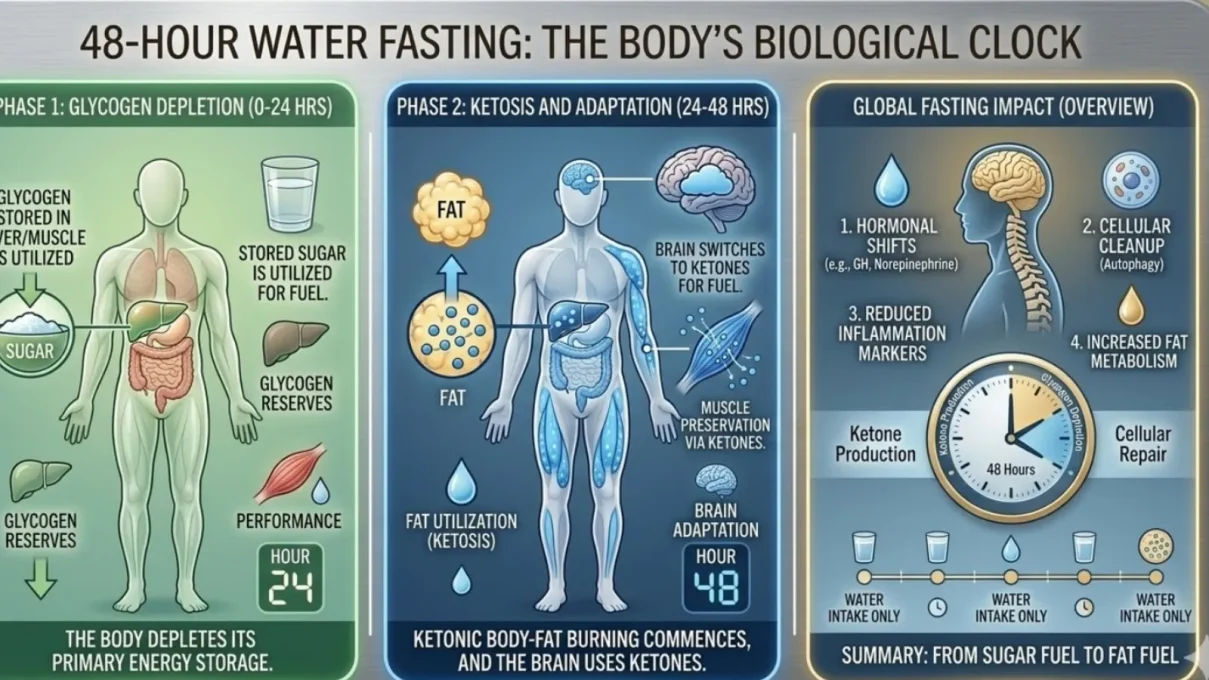
- Water fasting: This involves drinking only water for a set amount of time.
- Juice fasting: This entails only drinking vegetable or fruit juice for a certain period.
- Intermittent fasting: Intake is partially or completely restricted for a few hours up to a few days at a time, and a regular diet is resumed on other days.
- Partial fasting: Certain foods or drinks, such as processed foods, animal products, or caffeine, are eliminated from the diet for a set period.
- Calorie restriction: Calories are restricted for a few days every week.
Within these categories are also more specific types of fasts.
The bottom line
Fasting may have potential health benefits, including weight loss, improved blood sugar management, heart health, and cancer prevention.
When coupled with a nutritious diet and healthy lifestyle, incorporating fasting into your routine could benefit your health.

Recommended for You
-
ARTICLE

AI Business Ideas: 25 Profitable Opportunities to Start in 2026
Nazibur
-
ARTICLE

Best Accounting Software for Freelancers in 2026
Nazibur -
ARTICLE

The Echoes of Andara/Chapter 6
kishore karunik
-
ARTICLE

Yashasvi Jaiswal Biography: A Story of Hard Struggle to International Cricket Debut, Career Start and Success
Cricket Arif
-
ARTICLE

Psychologically, Your Posture Talks About You!
ArabiJarin
-
ARTICLE

Best AI Tools to Make Money Online
Enamul Hossain Shaikh
Your comment will appear immediately after submission.