Introduction
You’re ready to create a blog. You have some ideas about the topics you want to cover and even a notebook filled with plans for your blog. Then you Google “How to Start a Blog” and find yourself flooded with dozens of different blogging platforms, all of them stating that they’re the best one.
This is when many newbies become confused.
The Best Blogging Platforms for Beginners aren’t always the platforms with the largest amount of features; they are those which are suitable for your personal preferences, budget and experience in working with various platforms. And picking a right platform from the very beginning may help you avoid many troubles afterwards.
In this guide you will find the most popular blogging platforms of 2026 and their comparison.
Table of Contents
- Why Choosing the Right Blogging Platform Matters
- What to Look for in a Blogging Platform
- Best Blogging Platforms for Beginners
- Which Platform Should You Choose?
- Practical Examples
- Actionable Tips
- Common Mistakes
- Frequently Asked Questions
- Conclusion
Why Choosing the Right Blogging Platform
Matters
Your blogging platform is what builds your website. It will affect your:
• Site performance
• SEO abilities
• Ability to design
• Way to monetize
• Publishing abilities
Changing platforms later on is an option but could take a lot of time. Start with the right one to give your blog a better start.
What to Look for in a Blogging Platform
These are some of the things you need to consider when choosing your platform:
• Ease of use
• Customizability
• SEO opportunities
• Mobility
• Security
• Cost
• Community
• Moneymaking opportunities
Your platform needs to be user-friendly, which means it will be easy to post on it and will not hold back your growth in the future.
Best Blogging Platforms for Beginners
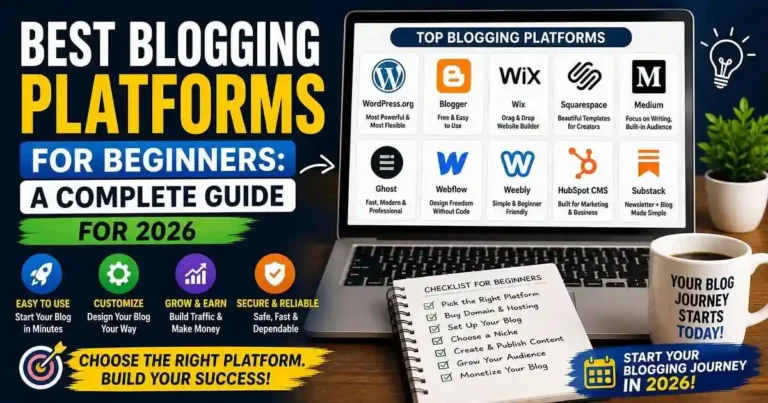
1. WordPress.org
Best For: Future Growth and Complete Control
WordPress.org manages thousands of websites all over the world for a good reason.
Pros
• Best SEO tools
• Thousands of themes and plugins
• Complete control of your website
• Customization
• Scalability
Cons
• Web hosting needed
• A little bit of a learning curve
WordPress.org is one of the best options when it comes to blogging for business.
2. Blogger
Best For: Free personal blogs
Owned by Google, Blogger is easy to start and completely free.
Pros
- Free to use
- Simple interface
- Reliable hosting
- Quick setup
Cons
- Limited customization
- Fewer modern features
- Less flexibility than WordPress
It’s a good starting point for hobby bloggers.
3. Wix
Who it suits: People who are beginners in drag-and-drop design
Wix allows users to make nice websites without knowing how to code.
Advantages:
• Very easy-to-use interface
• Adequate templates
• Having its own hosting service
• Good for beginners
Disadvantages:
• Not that flexible compared to WordPress
• Expensive pricing for premium version
4. Squarespace
Ideal For: Creative individuals
Squarespace is recognized for offering professional templates which can be helpful in making portfolios, photography and lifestyle blogs.
Strengths
• Elegant designs
• Convenience of management
• Hosting services
Weaknesses
• Poor customization options
• Expensive monthly subscription
5. Medium
Best For: Writers focused on publishing
Medium removes the technical side of blogging.
Pros
- No setup required
- Built-in audience
- Clean reading experience
Cons
- Limited branding
- Less control
- Restricted monetization options
6. Ghost
Best For: Professional publishers
Ghost focuses on speed, memberships, and content publishing.
Pros
- Fast performance
- Modern interface
- Built-in newsletter features
- Membership support
Cons
- Smaller plugin ecosystem
More technical than some alternatives
7. Webflow
Best For: Designers
Webflow offers advanced design flexibility while avoiding traditional coding.
Pros
- Professional designs
- Excellent performance
- Visual customization
Cons
- Steeper learning curve
- Higher pricing
8. Weebly
Best For: Simple blogs and small websites
Weebly provides an easy website builder suitable for beginners.
Pros
- Easy setup
- Drag-and-drop editor
- Affordable
Cons
- Limited scalability
- Smaller feature set
9. HubSpot CMS
Best For: Business Blogs
HubSpot integrates blogs with CRM and marketing software.
Advantages
• Marketing integration
• Analytics
• Security
• Business functionality
Disadvantages
• Pricing
• More than what beginners need
10. Substack
Best For: Newsletter-focused creators
Substack combines blogging with email publishing.
Pros
- Easy publishing
- Newsletter integration
- Subscription options
Cons
- Limited website customization
- Focused primarily on email audiences
Best Blogging Platforms for Beginners Based
on Your Goals
If You Want to Make Money
Select:
• WordPress.org
• Ghost
The above platforms provide the most flexibility for SEO, affiliate marketing, advertising, and digital products.
If You Want a Free Blog
Good options include:
- Blogger
- Medium
They’re simple to start but offer fewer customization and monetization features.
If You Want Beautiful Designs
Consider:
- Wix
- Squarespace
- Webflow
These platforms make creating visually appealing websites easier without coding.
If You Want the Simplest Setup
Try:
- Blogger
- Medium
- Substack
You can begin publishing within minutes.
Practical Examples
Example 1: Personal Finance Blogger
A fresh finance blogger decides on WordPress.org for their site’s scalability, article search engine optimization, and earning from affiliate marketing and products.
Example 2: Writer Hobbyist
An individual who likes writing chooses Medium to write articles fast and concentrate on writing itself without concerning website building.
Example 3: Lifestyle Creator
A travel blogger chooses Squarespace for their modern templates which enable to present photography in an appealing blog.
Actionable Tips
1. Establish your blogging objectives before picking a platform.
2. Have a long-term view rather than the short-term one.
3. Consider SEO and monetization if you want to develop your blog.
4. Select responsive themes for mobile devices.
5. Be familiar with basic website management techniques.
6. Backup your content.
7. Don’t switch the platforms often.
8. Concentrate on producing quality content.
Common Mistakes to Avoid
Many beginners make these mistakes:
- Choosing a platform based only on price.
- Ignoring SEO capabilities.
- Selecting a platform that limits future growth.
- Overlooking customer support.
- Prioritizing design over functionality.
- Frequently changing platforms.
Your platform should support your long-term blogging goals.
Frequently Asked Questions
1. What would be the best blogging website for newbies?
WordPress.org could be among the best blogging websites for those who are considering blogging.
2. Can Blogger be used as a blogging website in 2026?
Certainly, Blogger remains an excellent choice for hobbyists as well as those looking for a free blogging website.
3. Can one earn money using a free blogging website?
Certainly, but it will not be easy as there are limited ways through which one can make money using the free blogging website.
4. Is it necessary to be a programmer to create a blog?
No, since it is so easy to use the new blogs that one does not need to be a programmer in order to create one.
5. Could I later change my blogging platform?
Sure, but I would then have to change my content and links as well.
Conclusion
Choosing a platform from the Best Blogging Platforms for Beginners is an essential step towards establishing yourself as a good blogger. The correct platform will be the one which matches your objectives and capabilities as well as future growth options.
If you plan to build up a blogging career, then the best platform will be WordPress.org. On the other hand, if you just want to publish personal content with minimum effort, Blogger or Medium could work. Just concentrate on publishing useful information.










Your comment will appear immediately after submission.