Introduction
You write an article, promote it via social networks, and wait for some traffic to come. Yet nothing happens – useful content brings no traffic from search engines at all.
That is the reality which every blogger has to face eventually. In addition to producing quality content, you should know what kind of information people search for, how to properly optimize your web pages, fix any technical issues and track your progress.
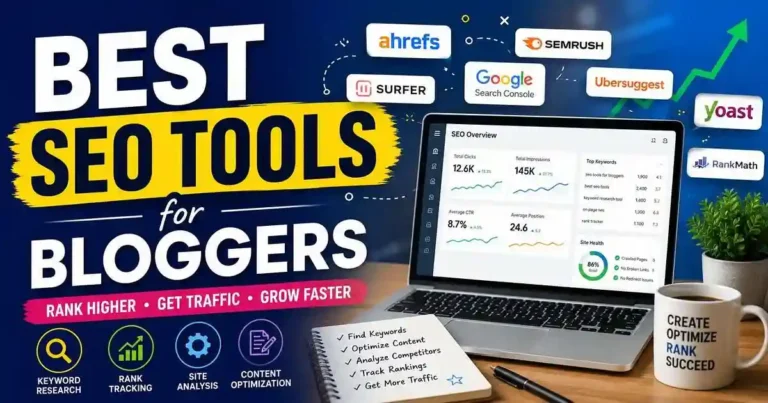
This is precisely the reason why you should try Best SEO Tools for Bloggers. Right SEO tools will help you to determine potentially profitable keywords, to optimize your content, evaluate your ranking possibilities and even find out how search engines understand your site.
Here, we will show you the list of most effective SEO tools for 2026 and how to pick up the correct set of them depending on your experience and budget.
Table of Contents
- Why Bloggers Need SEO Tools
- What Makes an SEO Tool Worth Using?
- Best SEO Tools for Bloggers
- Free vs Paid SEO Tools
- Recommended Tool Stack
- Practical Examples
- Common SEO Mistakes
- Actionable SEO Tips
- Frequently Asked Questions
- Conclusion
Why Bloggers Need SEO Tools
There are hundreds of ranking factors used by search engines. However, while there is no tool capable of getting you top results, good SEO software allows you to make better choices.
Advantages of SEO software include:
• Determining which keywords actually have search demand
• Learning about your competition
• SEO optimizing of articles before posting them
• Keyword rank tracking
• Detection of technical errors on your website
• Long term content planning
What Makes the Best SEO Tools for Bloggers?
But not all SEO tools are made for bloggers.
The most suitable usually include:
• Keyword research
• Content optimization
• Tech SEO
• Backlinking
• Rank tracking
• Competitive analysis
• User-friendly dashboards
• Reasonable prices
Sometimes tools focus on just one of these aspects, but sometimes they can offer everything in one package.
Best SEO Tools for Bloggers
1. Google Search Console
Best for: Monitoring website performance
Every blogger should start here.
Google Search Console shows:
- Search impressions
- Clicks
- Average rankings
- Indexing status
- Mobile usability
- Core Web Vitals
- Crawl errors
It’s completely free and provides data directly from Google.
Best for
- Beginners
- Technical monitoring
- Tracking keyword performance
2. Google Analytics 4
Most suitable for: Visitors analysis
SEO doesn’t only involve getting traffic.
Google Analytics allows you to analyze:
• Visitors’ source
• The best performing pages
• Visitor engagement duration
• Conversion tracking
• Visitor behavior
This will help you develop content to keep your visitors interested.
3. Ahrefs
Most suitable for: Hardcore bloggers
It’s considered one of the best SEO platforms today.
Some of the popular features include:
• Keyword explorer
• Site audit
• Rank tracker
• Backlink research
• Content explorer
• Competitive research
One of the most valuable features is an exhaustive backlink database.
4. SEMrush
For: Complete SEO package
SEMrush integrates various SEO applications within a single package.
These include:
• Keywords research
• Researching competitors
• Ranking tracking
• Backlinks research
• Content marketing applications
• Site auditing
It is ideal for bloggers who have many sites.
5. Ubersuggest
For: Economical bloggers
In case you find it hard to pay for SEO applications, then you can use Ubersuggest as a compromise between affordability and effectiveness.
The application offers the following:
• Keywords suggestions
• SEO analysis
• Competitor research
• Traffic predictions
• Content suggestions
It is an easy to use tool that is less complicated than other advanced software applications.
6. Surfer SEO
Best Suitable For: Content Optimization
An article is not enough.
The Surfer SEO software examines the content from a ranking website perspective and offers you the following things:
• Word Count
• Header Structuring
• Relevant Keywords
• Internal Linking
• Content Score
7. Yoast SEO
Best Suitable For: WordPress users
Although it is an older SEO plugin, but still is regarded as the best by many people.
This tool is used for optimizing the following things:
• Meta Title
• Meta Description
• XML Sitemap
• Content Readability
• Canonical URL
• Schema Markup
This is the first SEO plugin for blogging websites.
8. Rank Math
Best for: Advanced WordPress SEO
Rank Math has become a favorite because many premium features are available in the free version.
Features include:
- Rich snippets
- Keyword optimization
- Redirection manager
- Local SEO
- Image SEO
- WooCommerce SEO
It’s a strong alternative to Yoast.
9. Screaming Frog SEO Spider
Usage: Technical SEO Audit
It has all features that one can find in its desktop version.
The issues mentioned in the audit are:
• Broken links
• Duplicate title tags
• No meta description
Technical SEO Audit is very important for big blogs.
10. AnswerThePublic
Useful for: Idea generation for content
Sometimes the biggest problem in blogging is knowing what to write.
AnswerThePublic shows you what questions are being asked about your subject matter.
Example:
Search “investing,” and you could get:
• How to begin investing?
• Beginner’s guide to investing
• How to invest with small money
• How to invest in retirement
These could serve as great ideas for blog posts.
11. Grammarly
Useful for: Improving writing
Grammarly is not an SEO tool but increases readability.
Improved writing makes it more likely that your website will have:
• Longer stay times
• Lower bounce rate
• Good user experience
All these help SEO.
12. PageSpeed Insights
Best for: Website performance
Website speed influences user experience.
This free tool analyzes:
- Loading speed
- Largest Contentful Paint
- Mobile usability
- Performance suggestions
Even small improvements can positively affect rankings.
13. GTmetrix
GTmetrix provides detailed speed reports beyond Google’s own tools.
Useful metrics include:
- Page load time
- Total page size
- Waterfall reports
- Performance history
14. Keywords Everywhere
This browser extension displays keyword data directly in Google search results.
Helpful metrics include:
- Search volume
- CPC
- Competition
- Related searches
It saves time during keyword research.
15. Moz Pro
Moz remains a trusted SEO platform with excellent educational resources.
Popular features include:
- Domain Authority
- Keyword Explorer
- Link Explorer
- Site Crawl
- Rank Tracking
Its interface is beginner-friendly compared to some competitors.
Free vs Paid SEO Tools
Free Tools Paid Tools
Google Search Console Ahrefs
Google Analytics SEMrush
PageSpeed Insights Surfer SEO
Yoast SEO Free Moz Pro
Rank Math Free Ubersuggest Premium
For beginner bloggers, free tools will suffice.
As you scale up, paying for premium software offers more insightful information and saves time.
Recommended SEO Tool Stack for Bloggers
Beginner
- Google Search Console
- Google Analytics
- Rank Math
- PageSpeed Insights
Intermediate
- Ubersuggest
- Grammarly
- Keywords Everywhere
- Search Console
Advanced
- Ahrefs
- SEMrush
- Surfer SEO
- Screaming Frog
- Google Analytics
Practical Example
Imagine you run a personal finance blog.
You want to write about budgeting.
Instead of publishing immediately:
- Use Ahrefs to find keyword opportunities.
- Check related questions in AnswerThePublic.
- Write the article.
- Optimize it using Surfer SEO.
- Publish with Rank Math.
- Monitor performance through Search Console.
- Improve weak pages after reviewing analytics.
This workflow is far more effective than relying on intuition alone.
Actionable Tips for Better SEO
- Focus on one primary keyword per article.
- Write compelling meta descriptions.
- Update old blog posts regularly.
- Build internal links between related articles.
- Improve page loading speed.
- Use descriptive image ALT text.
- Publish consistently.
- Target long-tail keywords before highly competitive terms.
- Monitor rankings monthly.
- Fix technical errors quickly.
Common Mistakes Bloggers Make
A number of bloggers have SEO challenges because they:
• Post their blog posts without researching the keywords.
• Ignoring search intent.
• Often overstuff their posts with keywords.
• Often forget about using internal links.
• Never update old content.
• Forget about technical SEO.
• Don’t optimize their images.
• Only focus on traffic, not on conversions.
This can be more fruitful in many cases than pursuing the latest SEO trends.
Frequently Asked Questions
1. What is the best SEO tool for a novice blogger to begin with?
Google Search Console is considered the best one as it is free and gives useful information about the search performance in Google.
2. Is it worth using SEO tools paid by money?
Sure, it is especially relevant if you get money from your blog or make posts there regularly.
3. Is it possible to apply SEO tools for free?
Yes, there are plenty of cases when bloggers achieve their success due to such tools as Google Search Console, Google Analytics, Rank Math, and Page Speed Insights.
4. What SEO tool must be applied for keyword research?
One of the most efficient are Ahrefs and SEMrush; yet, Ubersuggest is an affordable alternative to the previous SEO tools.
5. How many SEO tools do I actually need?
Most bloggers only need three to five well-chosen tools rather than subscribing to every available platform.
Conclusion
Effective SEO Tools for Blogging – Choosing The Right Ones is not a search for the most expensive programs. This article is rather dedicated to choosing the programs which will be suitable for you regarding your goals and working style. Free SEO tools are enough to build a good SEO platform, while the paid ones may help you to save time on building your website since it is getting bigger.
Use Google Search Console and Google Analytics at first, and add other tools as your traffic increases. The content creation and constant optimization will work better than any software.












Your comment will appear immediately after submission.