Do you know whether your body weight falls within a healthy range? Or are you underweight, overweight, or obese? BMI or Body Mass Index is an internationally recognized measurement tool that answers these questions based on your height and weight.
BMI is not just a number. It is an early indicator of potential health risks including heart disease, diabetes, high blood pressure, and even certain types of cancer. Knowing your correct BMI means being alert on time and taking the first step toward a healthy lifestyle.
Calculate your BMI today using the modern tool below. It supports English, Bengali, and Hindi languages, and comes with voice support, detailed health tips, and an interactive BMI chart.
BMI Calculator Tool
Enter your height and weight in the tool below. You can use either Metric (cm/kg) or Imperial (ft/in/lbs) units. Age and gender are optional.
🏆 BMI Calculator Pro
Use the tool to instantly find out your BMI, weight category, ideal weight range, and personalized health advice.
BMI Formula & Calculation Method
Calculating BMI is very simple. You can use either of the formulas below.
Metric Method (cm & kg)
BMI = Weight (kg) ÷ Height (m)²
Remember: To convert centimeters to meters, divide by 100. For example, 170 cm = 1.7 meters.
Imperial Method (feet, inches & pounds)
BMI = Weight (lbs) ÷ Height (inches)² × 703
Example: Height 5 feet 8 inches = 68 inches; Weight 150 lbs
BMI = 150 ÷ (68)² × 703 = 22.8 (Normal weight)
BMI Categories & Health Risks (WHO Standard)
| BMI Range | Category | Health Risk Level |
|---|---|---|
| Below 18.5 | Underweight | Malnutrition risk, weak immunity |
| 18.5 – 24.9 | Normal | Lowest risk, healthy status |
| 25 – 29.9 | Overweight | Moderate risk – diabetes, heart disease |
| 30 – 34.9 | Obesity Class I | High risk |
| 35 – 39.9 | Obesity Class II | Very high risk |
| 40 or above | Severe Obesity | Extremely high risk, medical help needed |
Health Tips Based on Your BMI
Underweight
- Eat 5-6 small meals throughout the day
- Increase protein and healthy fats (eggs, milk, nuts, fish)
- Consult a nutritionist if you feel weak
Normal Weight – Best Position
- Maintain a balanced diet (protein + fiber + vitamins)
- Exercise at least 150 minutes per week
- Drink enough water and get adequate sleep
Overweight
- Reduce sugar, fried foods, and processed foods
- Walk at least 30 minutes every day
- Make it a habit to fill half your plate with vegetables
Obese
- Follow a weight loss plan under doctor and dietitian supervision
- Use calorie tracking apps
- Set realistic goals of losing 2-3 kg per month
BMI Chart – Visual Guide
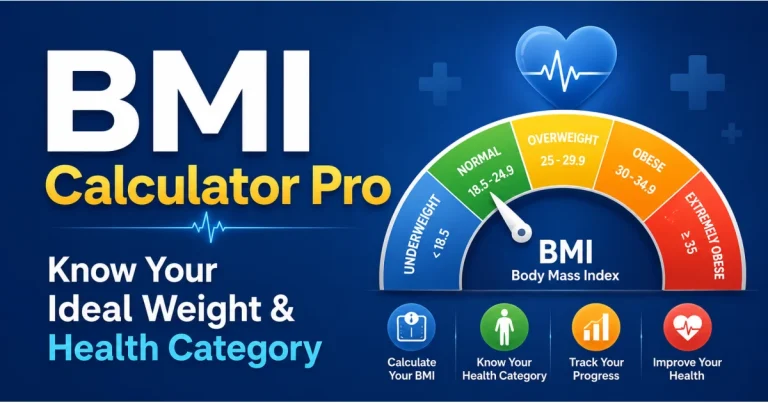
The chart below helps you quickly understand BMI categories. The tool also includes an interactive chart that moves a marker according to your BMI.
- Blue Zone → Underweight
- Green Zone → Normal (Best)
- Yellow Zone → Overweight
- Red Zone → Obese
Limitations of BMI
BMI is not 100% accurate for everyone. Be extra cautious in the following cases:
- Athletes or Bodybuilders: Higher muscle mass may show a high BMI even with low body fat
- Pregnant or Breastfeeding Women: Higher weight than normal is actually healthy during this time
- Elderly People: Muscle loss with age means even a low BMI might indicate weakness
In these cases, measuring body fat percentage and muscle mass is more effective.
Frequently Asked Questions (FAQ)
Is BMI the same for children?
No. Children and teenagers require separate BMI percentile charts based on age and gender.
How often should I check my BMI?
Those trying to lose or gain weight can check once a month. Generally healthy individuals can check every 3-4 months.
What should be my ideal weight?
The tool shows the lower and upper limits of ideal weight for your height. For example, the ideal weight for 5’5″ height is approximately between 50-68 kg.
Can I use BMI during pregnancy?
Weight gain is normal during pregnancy. In this case, it’s best to follow your prenatal care provider’s advice.
If my BMI decreases, do all disease risks decrease?
Coming into a healthy weight range significantly reduces the risk of diabetes, high blood pressure, and heart disease. However, diet and exercise are equally important, not just weight.
Final Words
Knowing your BMI means knowing an important indicator of your body. It alerts you in time and shows you the path to staying healthy. Use the tool above today to find out your category and make lifestyle changes if needed.
Remember, wellness is not a destination – it is a journey. And the first step of that journey is knowing your current status.
Disclaimer: If you have any medical condition, are pregnant, or are following a special diet, do not consider the above information as a substitute for professional medical advice.






Your comment will appear immediately after submission.