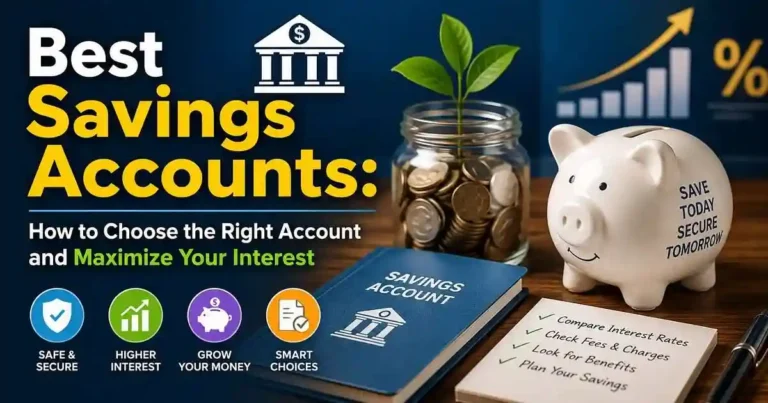
Think about checking into your banking application after a year to find out that your savings haven’t grown much, even though you have been putting aside some money each month. Many individuals think that all savings accounts are alike, yet the gap between a regular one and the best savings accounts could bring you much more interest without any additional risks.
First of all, a savings account is not only a place where you store money. With its help, you could create an emergency fund, gather money for a holiday, be ready to buy a house or just keep your money safe while getting interest. There is much more in picking a savings account than reading the offered rate of interest.
In this guide, we will discuss what is a savings account, which characteristics of it are important, and how to choose a good one.
- What Is a Savings Account?
- Why the Best Savings Accounts Are Worth Considering
- Types of Best Savings Accounts
- How to Compare the Best Savings Accounts
- Online Banks vs Traditional Banks
- Who Should Open a High-Yield Savings Account?
- Smart Tips for Maximizing Your Savings
- Common Mistakes People Make
- Frequently Asked Questions
- Conclusion
What Is a Savings Account?
A savings account is a type of bank account that enables one to save money through a secure method of storing the money and accruing interest. While checking accounts are meant to enable easy spending, savings accounts are designed to store money that will not be spent daily.
The most significant benefits of savings accounts are:
• Ability to store money safely
• Ability to earn interest
• Convenient depositing
• Convenience when accessing the money during emergencies
• Reduced risks of investing
Why the Best Savings Accounts Are Worth Considering
Interest rates can sometimes be very essential when it comes to determining the amount of money saved from your savings.
An illustration is provided below.
Sarah deposits $15,000.
With an interest rate of
• 0.25% per annum,
• She receives approximately $38 per annum.
However, if some other bank gives her
• 4.00% per annum,
• She will earn approximately $600 per annum.
It’s a pretty big difference although both have the same savings pattern.
It is important to note that the most effective saving schemes should work for you and be easily available.
Types of Best Savings Accounts
1. Traditional Savings Accounts
These are offered by local banks and credit unions.
Pros:
- Familiar banking experience
- Physical branches
- Easy customer support
Cons:
- Lower interest rates
- More fees in some cases
Best for:
People who prefer face-to-face banking.
2. High Yield Savings Account
High yield savings accounts are generally better investments than ordinary savings accounts because of their high-interest rates.
Advantages include:
• High APY
• Can be accessed online
• Savings accumulate more quickly
Useful for:
• Emergency savings
• Medium-term savings
• Savings reserve
3. Savings Accounts Online
Online banks usually incur fewer expenses because of which they provide competitive interest.
Advantages:
• Convenient interest rates
• Lower cost
• User-friendly mobile applications
• Fast transfer
Disadvantage:
Less or no brick-and-mortar branches.
4. Children’s Saving Accounts
These accounts help young people learn good financial behavior.
Parents may use these accounts to instruct children on:
• Regular saving
• The power of interest
• Money management
5. Joint Savings Accounts
Perfect for:
- Married couples
- Families
- Shared financial goals
- Vacation savings
- Home down payment funds
Everyone named on the account can usually access and contribute to it.
How to Compare the Best Savings Accounts
However, while interest rates are getting all the attention they deserve, there’s more to the story than that.
Annual Percentage Yield (APY)
It’s the interest rate that’s earned in a year taking into account compound interest.
Monthly Maintenance Fee
Some financial firms have to pay monthly maintenance fee, thereby reducing your margin of profit.
With such financial firms as those with:
• No monthly maintenance fee
• No inactivity fee
• No hidden fees
Minimum Balance Requirements
Certain types of accounts have requirements such as:
• a minimum initial deposit
• a minimum daily balance
• or a minimum monthly balance.
If your account falls below the requirement, you might be charged fees or receive reduced interest rates.
Accessibility
Consider:
• a user-friendly app
• simple fund transfers
• ATM accessibility
• good customer service.
Safety
Choose banks with government-backed deposit insurance where available in your country.
This protects your savings if the bank experiences financial problems.
Online Banks vs Traditional Banks
Online Banks
Benefits
• High interest rates
• Low fees
• Good online experience
• Quick account setup
Drawbacks
• No physical branch
• Cash deposits can be difficult
Traditional Banks
Benefits
• Personalized help
• More ATMs
• Have an existing bank account
Drawbacks
• Low interest
• Lot of account fees
• Outdated technology in some instances
In this case, the better choice is determined by one’s preference.
Who Should Open a High-Yield Savings Account?
High-yield savings accounts are suitable for individuals who save for short-term financial goals.
For instance:
• Emergency reserves
• Saving to buy a house
• Buying a car
• Paying for marriage ceremony
• Funding education
• Saving for medical purposes
These savings accounts offer a compromise between safety and profitability.
Practical Example
Assuming that James deposits:
• $400 each month
• Over three years
If his account pays him minimal interest, then his balance is basically comprised of his deposits.
With a higher savings interest and monthly compounding, he will earn more interest from the savings.
The amount earned will depend on the rate of interest and prevailing market conditions.
Smart Tips for Maximizing Your Savings
Automate Your Savings
Make arrangements for transferring funds automatically from your checking account.
Consistency will matter more than sporadic savings.
Keep Your Spending and Saving Separate
Don’t make purchases using your savings account on an ongoing basis.
Separating savings and spending accounts may help decrease unnecessary expenditures.
Verify Your Rates Regularly
Banks are always changing their savings rates.
Review your savings account every six to twelve months to ensure that you receive good offers.
Establish Your Emergency Fund First
Try to save up sufficient funds to cover three to six months of your living expenses before making investments.
This will probably help relieve any potential stresses in case of an emergency.
Leverage the Power of Compound Interest
The money you earn today will earn some more tomorrow.
The earlier you start to save, the better it is.
Common Mistakes People Make
Many savings accounts earn less than they should because of certain mistakes.
Keeping Money in Lower Interest Savings Account
Sticking to one bank doesn’t always make you rich.
Check better options regularly.
Overlooking Costs
Small monthly fees may accumulate over several years.
Chasing Promises of High Rates
Sometimes, banks promise high interest, which will then decline.
Always check the conditions of your savings account.
Keeping too much cash in the savings account
It is good for short-term savings; however, investing may be needed to beat the inflation rate in the future.
Not Going Through the Terms
Pay attention to:
• withdrawal limits
• minimum balance
• transfer conditions
• method of calculating interest
How to Choose the Best Savings Account for Your Goals
Consider the following questions:
• What are you saving the money for?
• How often do you require access to the money?
• Is the maximum interest the foremost requirement?
• Are you looking for branch access?
• Can you maintain minimum balances?
After having considered all of your requirements, comparison between different accounts becomes very easy.
Frequently Asked Questions
1. How does a savings account differ from a checking account?
While the former aims at facilitating spending, the latter is designed for saving money and getting some profit on it.
2. Is it safe to have an online savings account?
Yes, it is safe, provided that you have opened your online savings account in a reputable and insured financial institution.
3. Could my savings account money be lost?
Unlike different instruments of investments, a savings account cannot lose anything under any circumstances as long as it is impossible to experience any market fluctuations there. However, the amount of money you possess could decrease due to the inflation factor.
4. How much money should I have in my savings account?
As most financial experts say, the right amount of money in one’s savings account should be enough to pay for three to six months of life costs.
5. Should I have different savings accounts?
Yes, many people have several savings accounts to save money for special purposes, including emergencies, travels, tax payment, etc.
Conclusion
Selecting a good savings account is a straightforward process which has the potential to yield great benefits. Interest rates are significant but should not be the sole factor that determines the decision. There are other factors that should also be considered including fees, accessibility, customer service, flexibility of the account, and security.
It takes some effort and time to research and choose the right account that meets your needs. The savings account may not necessarily make you rich over night but will ensure that your funds appreciate safely.











Your comment will appear immediately after submission.