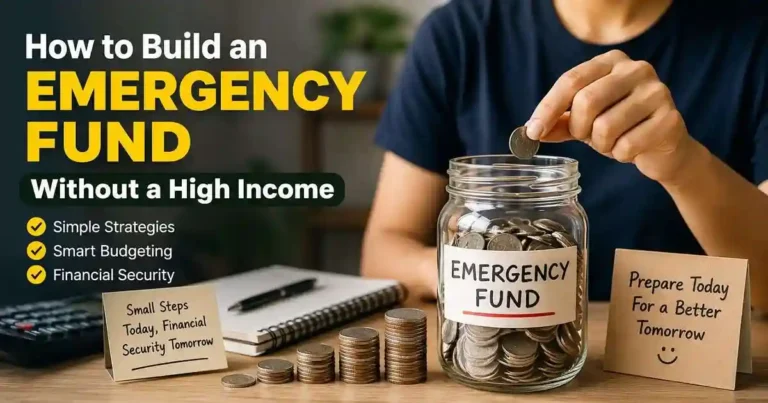
When discussing the topic of financial stability, one recommendation arises time and time again: create an emergency fund. Yet, many tend to believe that saving money is possible only with a significant level of salary. Nothing can be further from the truth.
Building an emergency fund despite low income is what many students, freelance workers, people working part-time, and underprivileged families want to know. The best thing is that your salary does not matter at all, as long as you have a right attitude towards saving. The process takes time but consistency and patience is what will make it successful.
I have seen many people who delayed their savings because they believed that they had to have some “better income” to start with. If you find yourself in similar situations when your pay check cannot cover all your expenses, you are not the only one.
What Is an Emergency Fund?
Emergency funds are savings that are put away to meet unforeseen circumstances. The emergency fund is different from the normal saving because it is not supposed to be used in paying for vacations, shopping, and entertainment.
The money is only supposed to be used in real emergencies such as:
• Medicare costs
• Loss of employment
• Emergency home repairs
• Unforeseen automobile repairs
• Other family emergencies
Why Low-Income Earners Should Prioritize Saving
Many feel that they are unable to save since they earn less money. Paradoxically, individuals who have low incomes benefit a lot more by having an emergency fund than those who have high incomes.
If you do not have savings, then even a small expenditure can throw your monthly budget off track. A small thing like breaking a cell phone, receiving a medical bill, or being temporarily unemployed can create a financial disaster for you.
Savings is all about making the right habit rather than how much you start with.
Start Small and Stay Consistent
One of the most common errors is the belief that you have to save hundreds of dollars per month.
You don’t.
Even saving a little bit here and there can help.
Such as:
• Saving two dollars daily.
• Saving ten dollars weekly.
• Saving change left from your shopping.
• Saving an exact sum each payday.
It is the regularity of saving that counts, not the amount.
Create a Simple Budget
Budgeting is not about limiting yourself to a certain lifestyle but understanding where your money goes.
It includes the following steps:
• Total monthly income
• Necessary expenses
• Costs on optional goods/services
• The target savings
You might be surprised to see that some of your subscriptions go unused or find out how much money you spend on unplanned things.
Cutting down a small number of expenses will help save money for your rainy day fund.
Separate Your Savings
One good approach is to keep emergency savings in a separate account at the bank.
When such funds are kept in your checking account for daily expenses, it gets too easy to use them unconsciously.
This creates a kind of mental barrier that will make you more inclined to saving.
And many people discover how helpful this is.
Save Unexpected Income
Whenever you get cash that is not your ordinary income, think about setting aside some of that cash.
Here are some examples:
• Tax rebate
• Money gifts
• Cash payments
• Bonuses
• Back money
Since the money you received is not a part of your usual budget, it’s much easier to save it rather than reduce your spending on something.
Reduce Small Daily Expenses
Creating an emergency fund does not have to involve drastic measures.
Rather, think about the small expenses you do on a consistent basis.
Some of them may be:
• Buying coffee daily
• Ordering food regularly
• Spending money on unused subscriptions
• Buying on impulse online
Cutting just one such unnecessary expenditure per week will make a great difference throughout the year.
The idea is not to deprive yourself of pleasure but to be more conscious of your expenditures.
Increase Your Income Gradually
But that’s not all; there is another way. Boosting your income will get you there even faster.
A new full-time job isn’t always necessary.
Some of the many ways through which people make extra money include:
• Writing for money online
• Selling digital products
• Affiliate marketing
• Teaching others
• Performing local services
• Selling used goods
Even a small amount of money that goes into your fund will help you to achieve your goal sooner.
Set Realistic Goals
It is generally suggested by many financial advisers that one should save between three and six months of monthly expenditure.
Although this would be a great target to aim for in the long term, it might seem quite daunting initially.
This can be achieved in stages.
For instance,
o Goal One: $100
o Goal Two: $300
o Goal Three: $500
o Final Goal: Three months of expenditure
Be Patient With Yourself
I have learned that one thing about making financial progress is that it does not happen overnight.
There are going to be some months where something out of the ordinary will happen that makes saving impossible.
Sometimes, there might be occasions where some of the money saved needs to be withdrawn from the emergency fund.
This is quite normal since the role of an emergency fund is to be there for emergencies.
What matters is to build up the fund once again.
Final Thoughts
Knowing how to create an emergency fund when you do not have a lot of money to spare is not about coming up with some ingenious plan. It is about forming good habits that will suit your situation.
It does not matter what kind of income you make because having a lot of money is not a requirement for starting to save. You just need persistence and the readiness to put money aside regardless of how little it may be.
Every single cent you manage to put aside brings you closer to having financial safety. If you are thinking of starting to save once you have some extra money on hand, start now.
Even $5 this week means taking a big step towards financial security.
Frequently Asked Questions
How much should I save in an emergency fund?
Aim for three to six months of living expenses. If that’s not possible right now, start with a smaller goal such as $100 or $500.
Can I build an emergency fund with a low salary?
Yes. Consistent saving, even in small amounts, can gradually build a reliable emergency fund.
Where should I keep my emergency fund?
A separate savings account is usually the best option because it keeps the money accessible while reducing the temptation to spend it.












Your comment will appear immediately after submission.