Introduction
You write a blog post, promote it on your social media accounts, and analyze your statistics multiple times within the day. There is no increase in traffic whatsoever. After a couple of weeks, you’re already questioning whether or not it’s worth your while to continue with blogging.
The reality is that there is no success blog site out there that has developed spontaneously. Blogs have succeeded because their owners have prioritized certain things and worked consistently on improvement in them. This is precisely why having your Blogging Goals for 2026 is one of the wisest things you could do prior to writing your next blog post.
Whether you blog for leisure, own a niche website, or operate a company blog site, proper goals will guide you to success.
Table of Contents
- Why Blogging Goals Matter
- How to Set Realistic Blogging Goals for 2026
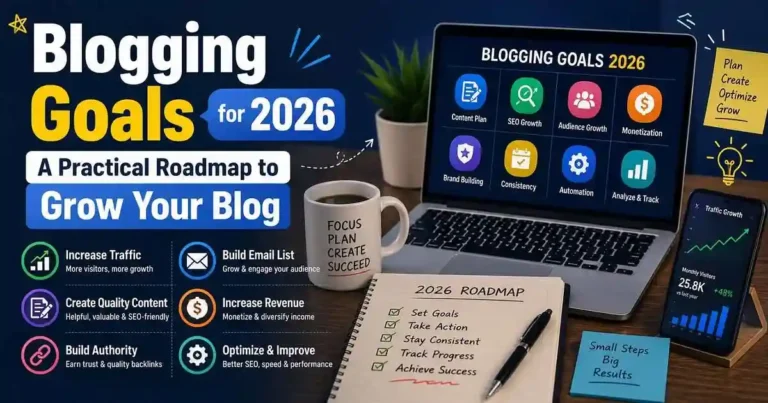
- 15 Blogging Goals Worth Pursuing
- Measuring Your Progress
- Practical Examples
- Actionable Tips
- Common Mistakes to Avoid
- Frequently Asked Questions
- Conclusion
Why Blogging Goals Matter
Without objectives, it becomes quite easy to waste time on work that does not help in achieving any meaningful growth.
Objective setting allows you to:
• Remain consistent in publishing.
• Do the right activities.
• Measure your progress.
• Improve your motivation.
• Make smarter content choices.
• Grow more income.
Rather than thinking about “what should I write today?”, you think about “what is the content to write to achieve my objective?”
How to Set Realistic Blogging Goals for 2026
The goals must be clear and specific.
Instead of writing:
“I need more visitors.”
Write:
“I need 40% more organic visitors before December 2026.”
And hence, it will become easy for you to measure your success.
The goals must be clear and specific.
Instead of writing:
“I need more visitors.”
Write:
“My goal is to get 40% more organic visitors before December 2026.”
It will become very easy for you to measure your success in meeting your goals.
15 Blogging Goals for 2026
1. Publish High-Quality Content Consistently
It is very important to be consistent in order to earn the trust of the reader and the search engines.
Rather than making new blog posts every day, try to make a practical schedule.
For example:
– One well-researched post per week
– Two revised old posts per month
Quality will always be superior to quantity.
2. Increase Organic Traffic
Organic search remains one of the most reliable traffic sources.
Focus on:
- Keyword research
- Search intent
- Internal linking
- Helpful content
- On-page SEO
Improving existing articles can often deliver better results than constantly publishing new ones.
3. Build Topical Authority
The search engine is giving out more preference to sites that have expertise in a particular field.
Rather than dealing with multiple fields, form clusters based on your niche.
For instance, the personal finance blog can cluster topics on:
• Budgeting
• Investing
• Credit cards
• Money-saving
• Retirement planning
4. Grow Your Email List
Algorithms on social media constantly change.
Your audience is accessible to you via an email list.
Offer:
• Guides
• Checklists
• Templates
• Newsletters
• Exclusive content
5. Improve Content Quality
Consider the following questions:
• Does the article address the issue concerning the reader?
• Is it readable?
• Is it valuable at all?
• Is the structure correct?
The updating of the article is much easier compared to writing a new one.
6. Increase Blog Revenue
Potential monetization methods can involve:
• Display ads
• Affiliate marketing
• Sponsored content
• Digital products
• E-learning
• Consultation services
Having multiple sources of income increases flexibility.
7. Refresh Old Articles
Older content can become outdated.
Regular updates improve:
- Accuracy
- Rankings
- User experience
- Click-through rates
A refreshed article often performs better than a brand-new post.
8. Improve Page Speed
Readers expect fast-loading websites.
Compress images, enable caching, and remove unnecessary plugins to create a smoother experience.
9. Strengthen Internal Linking
Internal links help:
- Users discover related content.
- Search engines understand your site.
- Important pages receive more authority.
Review your content regularly to identify linking opportunities.
10. Build High-Quality Backlinks
Instead of pursuing thousands of links, get links from credible and relevant websites.
These include:
• Guest posting
• Research articles
• Useful tools
• Industry cooperation
11. Increase Reader Engagement
Encourage readers to:
- Leave comments
- Share articles
- Join your newsletter
- Follow you on social media
An engaged audience is more valuable than high traffic with low interaction.
12. Improve SEO Knowledge
Search engines are always evolving.
Spend some time each month reading up on:
• Core updates
• Technical SEO
• Content optimization
• User experience
Knowledge equals wisdom.
13. Create Evergreen Content
Evergreen articles keep bringing people even years after their creation.
They can be:
• Beginners’ guides
• Tutorials
• Lists of resources
• Checklists
Evergreen articles tend to become your most valuable possessions.
14. Use Analytics More Effectively
Data eliminates the element of guesswork.
Measure:
• Organic traffic
• Bounce rate
• Time on page
• Conversion rates
• Top-performing articles
This will help you improve your content marketing strategy.
15. Build a Recognizable Brand
Your blog should be memorable.
Focus on:
- Consistent writing style
- Professional design
- Clear messaging
- Helpful content
- Authentic voice
A strong brand encourages readers to return.
Measuring Your Blogging Progress
Check your performance on a monthly basis.
Some useful metrics are:
Goal Metric
Traffic Monthly visitors
SEO Keyword ranking
Engagement Comments/shares
Email Growth New subscribers
Revenue Monthly income
Authority Backlinks
Little changes on a monthly basis can add up to big changes in a year.
Practical Examples
Example 1: New Blogger
A new blogger determines that he should make four awesome blog posts each month and get acquainted with the fundamentals of SEO. Organic traffic increases after some time.
Example 2: Niche Site Owner
The tech blogger prefers sticking to his previous tutorials instead of trying anything else. His previous blog posts become visible on Google and attract traffic.
Example 3: Business Blog
The software company makes blog posts with useful information instead of sales pitches. The blog posts attract leads through traffic via search engines and newsletters.
Actionable Tips
1. Plan out your activities on a monthly rather than yearly basis.
2. Keep the old articles up to date.
3. You should always have a content calendar at hand.
4. Know why you require the search to write an article.
5. Build your topic clusters.
6. Borrow some ideas from your competition but do not copy the content.
7. Measure the outcomes of your work using analytics.
8. Don’t forget to appreciate yourself for all small victories!
Common Mistakes to Avoid
Things that you need to avoid doing while creating your blog are:
• No planning before publishing.
• Conformity to every single trend.
• Ignoring the basics of SEO.
• Writing only for Search Engine Optimization.
• Looking for immediate effects.
• Failure to update old posts.
• Setting very high goals.
Frequently Asked Questions
1. What should be the best blogging goals for 2026?
Some of the goals which I would consider good are organic traffic generation, regular writing, creation of an email list, doing SEO, revising old articles and making money from various sources.
2. How many blog posts should I write monthly?
The answer is not any specific figure but rather you may require establishing an achievable strategy for creating quality content rather than posting more frequently.
3. Do I focus more on traffic or earnings?
Most of the bloggers prefer traffic over making money.
4. How frequently should I refresh my old posts?
Refer to those significant blog posts after six to twelve months, or even earlier if there is an update in their content.
5. Will a new blog succeed in 2026?
Yes, even though there will be fierce competition, a blog will still succeed.
Conclusion
Goals for 2026 for Your Blog keeps your blog on course and makes sure that you keep doing what you need to do in order to have results. Do not waste any time looking for quick solutions; just focus on regular postings, good content, successful SEO, and evaluations.
There are no shortcuts to success anywhere. With realistic goals and an evaluation of your performance, you will be able to take your blog to new heights.










Your comment will appear immediately after submission.