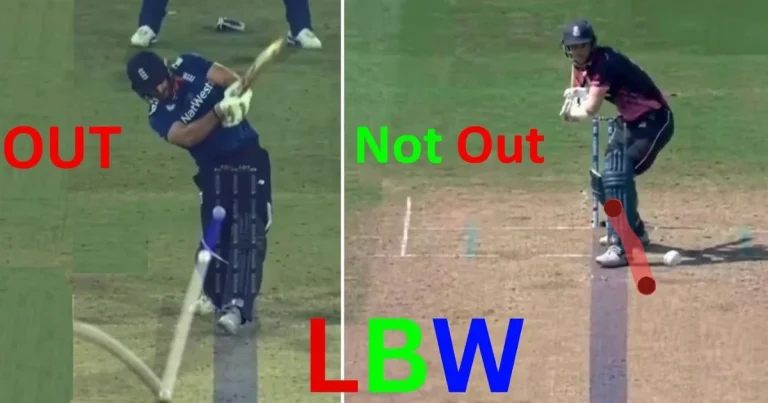
LBW is one of the most controversial and toughest decisions for umpires in cricket. According to Law 36 of the MCC, if the ball hits any part of the batsman’s body (usually the pad) without touching the bat, and the umpire believes the ball would have hit the stumps, the batsman can be given out. However, 5 main conditions must be met for this.
1. Main Conditions for LBW Out:
According to MCC rules, a batsman will only be out when the following occurs:
- 1.1 Legal Delivery: The bowler must bowl a legal delivery. If the ball is a ‘No-Ball’, the batsman cannot be given out LBW under any circumstances.
- 1.2 Pitching and Hitting the Pad: The ball must pitch either directly in line with the wickets or on the off-side. If the ball pitches outside the leg stump (Outside Leg) and then hits the batsman’s pad or body, the batsman cannot be given out LBW (even if it looks like the ball would have hit the stumps).
- 1.3 Attempt to Play a Shot: When the ball hits the batsman’s pad or body, it must be before hitting the bat or glove.
- 1.4 Impact: If the batsman attempts to play a shot, the ball must hit the pad or body ‘In line’ with the wickets. However, if the batsman does not attempt to play a shot (Dead bat/Leaving the ball), he can be given out even if the impact is outside the off-side.
- 1.5 Hitting the Stumps: The umpire must be certain that if the ball had not hit the pad or body, it would have gone on to hit the stumps directly.
2. When will it NOT be LBW Out? (Cautions):
In some cases, even if the ball hits the pad, the umpire will not give it out:
- 2.1 Hitting the Bat or Glove (Hand attached): If the ball hits any part of the bat first, or the glove (hand) holding the handle of the bat and then hits the pad, it will not be out.
- 2.2 Pitching Outside Leg Stump: If the ball pitches even slightly outside the batsman’s leg stump and hits the pad, he is Not-Out according to the law.
- 2.3 Height: If there is a possibility that the ball would have gone over the stumps after hitting the pad, the batsman will not be out.
Conclusion
Law 36 of cricket was created so that batsmen cannot use their pads or body as a second bat to protect the stumps. It maintains the balance of the game. With the introduction of DRS (Decision Review System) in modern cricket, the accuracy of these LBW decisions has increased significantly. For a batsman to survive an LBW, it is essential to ensure not just foot movement, but also the line of the ball and proper connection with the bat. Just as this law is a pressure for the batsman, it is one of the best weapons for a bowler.
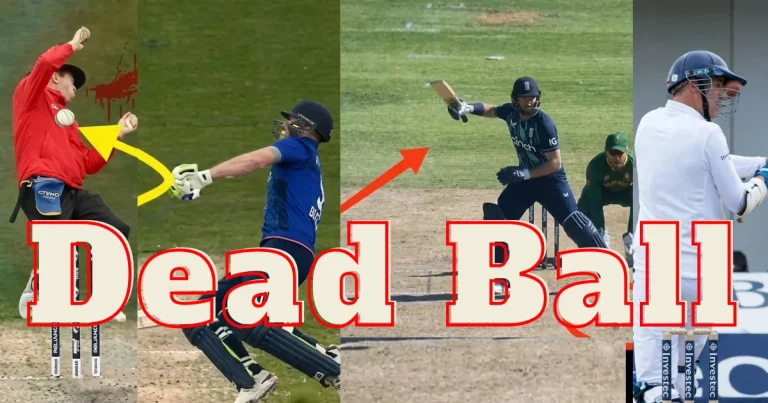
If you would like to learn more details about the surprising rules regarding ‘Dead Balls’ in cricket, you can check out: Dead Ball Rules and Laws in Cricket | MCC Law 20.



Your comment will appear immediately after submission.