All of sudden your car stops working on your way to work. Your health care bills are received but not covered completely by your insurance. Your boss informs you about layoffs unexpectedly. All these cases may be hard enough without thinking how you will manage them.
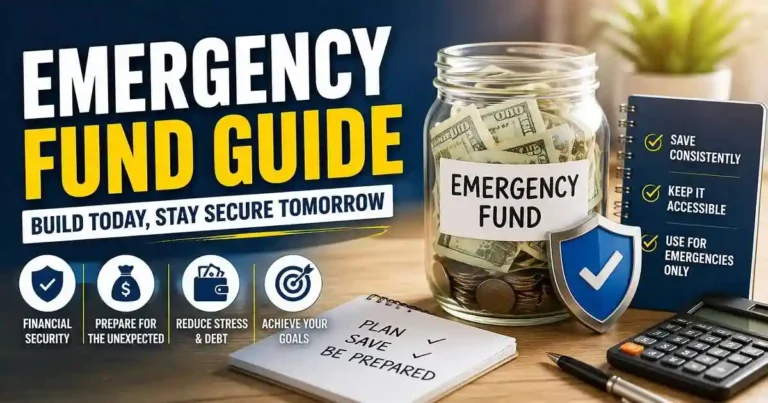
This is exactly why an emergency fund is necessary. This guide on the Emergency Fund shows how you can create your own financial cushion in case of any unexpected spending. And you don’t have to earn hundreds of thousands of dollars to start doing this. The important thing here is to form a habit of saving regularly.
And an emergency fund is not about saving up for any bad things to happen, it is about being prepared for any kind of unexpected situation in life.
What Is an Emergency Fund?
Emergency money is basically money saved for unforeseen expenses. This is different from money that you might have saved to go on holiday or purchase electronics; this is money saved for any kind of emergency financial situations.
This includes:
- Medical emergencies
- Loss of employment
- Major car repairs
- Household repairs
- Emergency travel needs
- Family emergencies
Why Everyone Needs an Emergency Fund
It Makes Things More Financially Relaxing
Being assured about the presence of money reserves in the event of any unexpected occurrence makes things less stressful as you know there is nothing to worry about how to pay for an unexpected thing.
It Allows You Not To Take Out Loans
In the absence of any emergency savings, people normally take help from credit card debt and other loans, which in turn result in the obligation of paying interest on those.
It Offers You Some Flexibility
In the event of being fired from the job, you can take some time before getting into the proper job rather than settling down in anything.
It Protects Your Financial Plans
Without emergency saving, you have to make use of your money reserves such as retirement accounts and others.
How Much Should You Save?
One of the most frequent queries posed is “What amount is enough?”
This will be based on your earnings, expenditure, and job security.
Beginner Goal
Target $500-$1,000 (equivalent of this amount in the currency of your country). This sum will cater to many emergencies that occur.
Intermediate Goal
Savings that will allow you to pay for three months of your essentials expenditure.
The essentials include:
- Rent/Mortgage
- Food Expenses
- Utility Bills
- Insurance Premiums
- Transportation
- Liability payments on any loan
Long-term Goal
If your earnings are unpredictable or if you have an irregular income, aim to save for six to twelve months of your essentials expenditure.
Calculate Your Emergency Fund
But the main point here is that you need to record your monthly expenses at its lowest possible level.
For instance:
| Expense Category | Lowest Possible Monthly Expenses |
|---|---|
| Rent | $800 |
| Food | $350 |
| Utility Bills | $150 |
| Travel | $200 |
| Insurance Premiums | $100 |
| Internet & Mobile | $80 |
| Total | $1,680 |
Monthly expenses × Number of months = Emergency Fund Target
Where Should You Keep Your Emergency Fund?
Accessibility trumps achieving the best possible returns.
These are good options:
High Yield Savings Account
This account gives you both accessibility and earns interest.
Savings Account Separately
Storing your emergency money in a separate account means that it won’t tempt you to withdraw it.
Money Market Account
It’s liquid and also pays interest most of the time.
Don’t store your emergency money in:
- Stocks
- Cryptocurrency
- Liquid investments
- Risky investments
- Limited Withdrawal Accounts
You want your emergency fund to be safe and accessible.
Emergency Fund Guide: Step-by-Step Plan
Step 1: Establish a Realistic Goal
You do not have to establish such an ambitious goal in order to save several months’ expenses.
Instead, it is better to try starting with $500 or $1000.
This will motivate you to achieve small goals.
Step 2: Create Monthly Budget for Saving
To begin with, find out your monthly expenses.
Consider the opportunities of their reduction.
They might be:
- Going out less often
- Getting rid of the unused subscriptions
- Avoiding impulse purchases
- Reducing entertainment expenses
Step 3: Automation of the Process of Saving
Organize automatic process of saving money from your paycheck.
Consider it as another monthly bill.
What is important is the constancy rather than the amount.
Step 4: Savings of Extra Income
Your extra income will let you save additional money.
Think about saving at least some money from:
- Tax refund
- Bonus
- Cash presents
- Freelance work
- Cash back
Step 5: Increasing Your Monthly Savings
As your income increases, your monthly savings will also rise.
For example:
- At first, save $50 a month.
- Next, save $100 on getting your raise.
- Finally, save $150.
Emergency Fund Target Calculator
| Monthly Expenses | 3-Month Fund | 6-Month Fund | 12-Month Fund |
|---|---|---|---|
| $1,000 | $3,000 | $6,000 | $12,000 |
| $1,500 | $4,500 | $9,000 | $18,000 |
| $2,000 | $6,000 | $12,000 | $24,000 |
| $2,500 | $7,500 | $15,000 | $30,000 |
| $3,000 | $9,000 | $18,000 | $36,000 |
| $4,000 | $12,000 | $24,000 | $48,000 |
Practical Example
Since Rahul makes $2,500 per month and spends around $1,800 per month on his monthly expenses.
It will be necessary for Rahul to save an amount equal to six months’ expenditure in order to make an emergency fund:
$1,800 x 6 = $10,800
But rather than putting any kind of effort to achieve this objective, Rahul manages to save:
- $250 per month
- Yearly tax returns
- Half of the annual bonus
Within two years’ time, Rahul achieves this objective without altering his lifestyle in any way.
When Should You Use Your Emergency Fund?
Not every unexpected expense qualifies.
Use your emergency fund for:
- Medical emergencies
- Urgent home repairs
- Necessary vehicle repairs
- Job loss
- Emergency travel
- Essential family emergencies
Avoid using it for:
- Vacations
- Shopping
- Holiday gifts
- New electronics
- Luxury purchases
- Planned expenses
If you know an expense is coming, save separately for it.
What If You Need to Use It?
Using your emergency fund isn’t a failure.
That’s exactly why it exists.
Once the emergency passes:
- Review how much you used.
- Adjust your budget if necessary.
- Restart automatic savings.
- Rebuild the balance gradually.
Think of your emergency fund as a financial tool that needs occasional refilling.
Common Mistakes to Avoid
There are many people who suffer from issues that can be avoided easily.
Take notice of these:
- Hoarding your money once you make more.
- Investing money reserved for emergencies in risky investments.
- Failure to separate your money set aside for emergencies and your regular finances.
- Using the money on unnecessary expenses.
- Creating unreasonable savings plans.
- Discontinuing your savings once you meet the first objective.
- Overlooking inflation and fluctuating cost of living.
Creating an emergency fund should be an ongoing project.
Tips to Build Your Emergency Fund Faster
- Automate transfers every payday.
- Save part of every bonus or tax refund.
- Sell unused household items.
- Take on occasional freelance work.
- Reduce impulse purchases.
- Direct salary increases toward savings.
- Review your budget every few months.
These small actions can significantly speed up your progress.
Frequently Asked Questions (FAQ)
How much do I need in an emergency fund?
Financial experts advise that you save three to six months of basic living expenses. When your income is unreliable, you need six to twelve months.
Where is the ideal location to store emergency cash?
Ideally, it would be somewhere where your cash is secure, accessible, and earning some form of interest, such as a high-interest savings or money market account.
Should I invest my emergency fund?
No. An emergency fund does not seek gains but security and easy accessibility.
Is it alright to start small?
Yes. It is better to save a small amount regularly rather than waiting for when you have enough to save at once.
What do I do after I have achieved my goal?
Continue checking your emergency fund according to how your expenses evolve. Once your fund is fully financed, you can start saving for other purposes such as investing.
How quickly should I build my emergency fund?
It depends on your income and expenses. A common timeline is 6-12 months for a full 3-6 month fund. Start with a smaller goal like $500-$1,000 in the first 2-3 months.
Should I have a separate emergency fund for different purposes?
One main emergency fund is usually sufficient. However, you can create separate savings buckets for specific goals like car maintenance or medical expenses while maintaining a core emergency fund.
Conclusion
Establishing an emergency fund is one of the wisest decisions that you can make from a financial perspective. As illustrated in this Emergency Fund Guide, building up a safety net does not demand that you earn a lot of money or that you budget perfectly; it demands discipline and patience.
Life is bound to throw curveballs, but with savings set aside for those purposes, the curveballs do not need to be a financial disaster. Set reasonable goals for yourself, make saving automatic, and try to save more each month.











Your comment will appear immediately after submission.