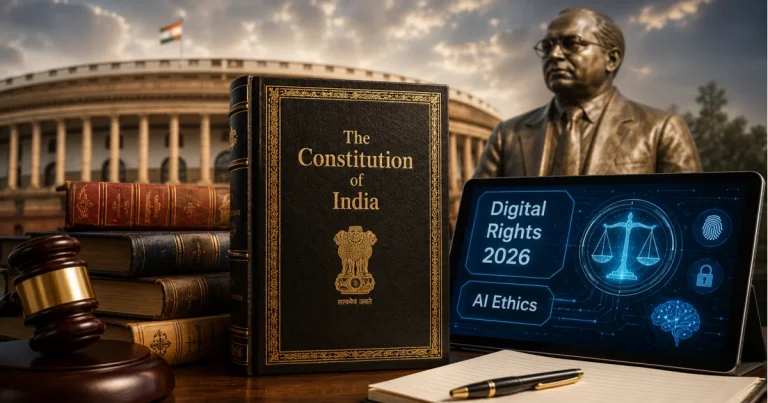
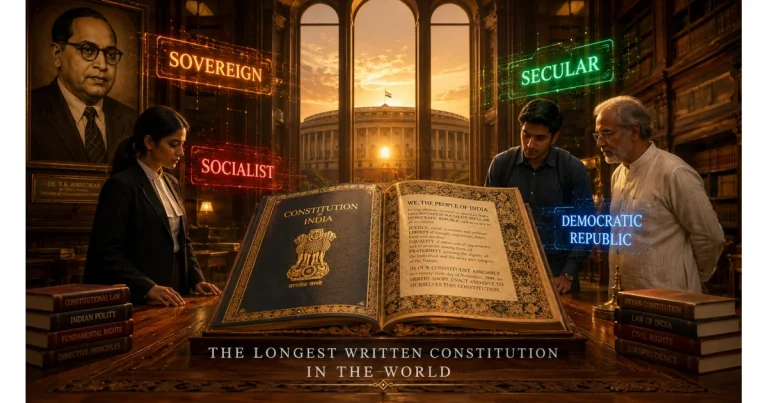
The Constitution of India is not just a legal document; it is a living blueprint that defines the identity of over 1.4 billion people. As the longest written constitution of any sovereign nation, it balances the wisdom of the past with the technological demands of the future.
1. A Historic Epic: The Making of the Constitution
The journey toward a sovereign republic was a monumental task that took 2 years, 11 months, and 18 days to complete.
- The Architect: Under the visionary leadership of Dr. B.R. Ambedkar, the Drafting Committee meticulously analyzed over 60 global constitutions.
- The Adoption: The Constituent Assembly adopted it on November 26, 1949, and it officially came into force on January 26, 1950, marking the birth of the Republic of India.
2. The Preamble: The Identity Card of the Nation
The Preamble serves as the philosophical key to the Constitution. It declares India to be a:
- Sovereign, Socialist, Secular, and Democratic Republic.
- It promises its citizens Justice, Liberty, Equality, and Fraternity.
3. Core Structure: A Massive Legal Framework
While the original 1950 version was extensive, the Constitution has evolved significantly. As of 2026, the structure includes:
- Articles: 470+ (organized into 25 Parts).
- Schedules: 12 Schedules covering specific administrative details.
- Amendments: Over 106 amendments, proving its nature as a “Living Document.”
4. Fundamental Rights: Your Shield Against Injustice
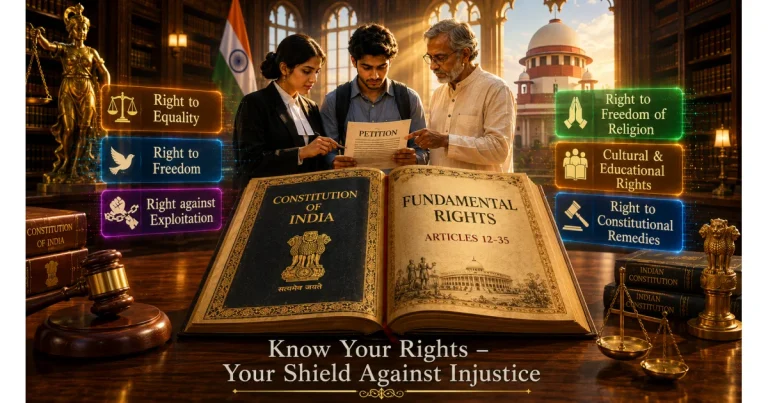
Part III of the Constitution is the most vital for citizens. These rights are justiciable, meaning you can move the Supreme Court directly if they are violated:
- Right to Equality: No discrimination based on religion, race, or caste.
- Right to Freedom: Speech, assembly, and movement.
- Right against Exploitation: Abolition of forced labor and child labor.
- Right to Freedom of Religion: Freedom to practice and propagate any faith.
- Cultural and Educational Rights: Protection for minorities.
- Right to Constitutional Remedies: The “Heart and Soul” of the Constitution (Article 32).
5. The Three Pillars of Governance
To prevent the concentration of power, the Constitution divides authority into three independent branches:
- The Legislature: Responsible for making laws (Parliament).
- The Executive: Responsible for implementing laws (President and PM).
- The Judiciary: The independent guardian of the Constitution (Supreme Court).
6. Digital Rights in 2026: The Modern Frontier
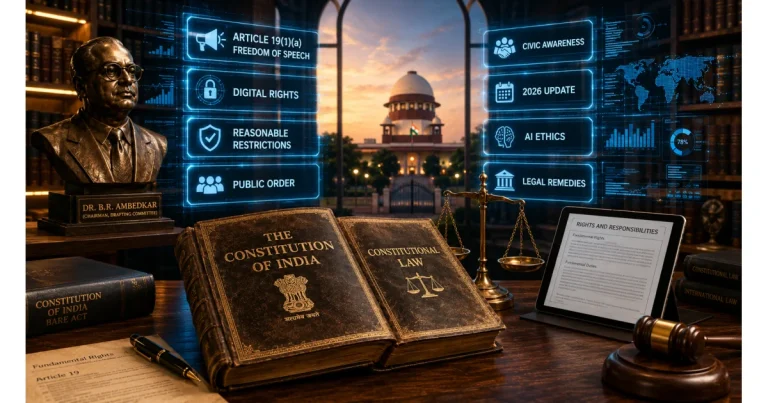
In the era of AI and big data, the Indian Constitution continues to protect citizens in the digital space:
- Right to Privacy: Now a fundamental right under Article 21, protecting your personal data.
- AI Ethics: Current legal interpretations focus on preventing algorithmic bias and ensuring digital equality for all.
Frequently Asked Questions
Why is India’s Constitution called a “Bag of Borrowings”?
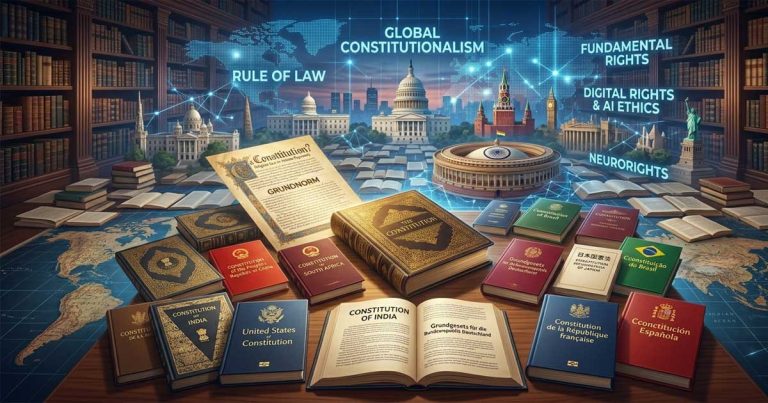
It intelligently integrates the best features from around the world—like Parliamentary democracy from the UK and Fundamental Rights from the USA—tailored to Indian needs.
Can Parliament change the entire Constitution?
No. Following the Kesavananda Bharati case, the Supreme Court ruled that Parliament cannot alter the “Basic Structure” of the Constitution, such as democracy and secularism.


Your comment will appear immediately after submission.